Every child
deserves
to read.
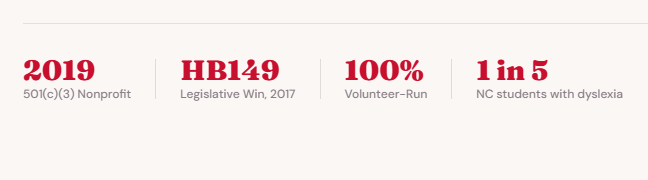
Decoding Dyslexia NC is a 501(c)(3) grassroots movement of North Carolina families, educators, and professionals fighting for access to evidence-based dyslexia interventions in our public schools.
What do we do?
Support individuals with dyslexia, families, and educators across North Carolina by answering questions and connecting them with helpful resources.
Provide free workshops and expert Q&A sessions on dyslexia, literacy, and educational advocacy.
Expand our website resources to inform and empower individuals with dyslexia, families, educators, and advocates.
Provide grants to outstanding community partners who support literacy and individuals with dyslexia across North Carolina.
DYSLEXIA AWARENESS
DYSLEXIA AWARENESS
Dyslexic Youth Voices: Sharing Stories, Building Confidence, and Inspiring Others
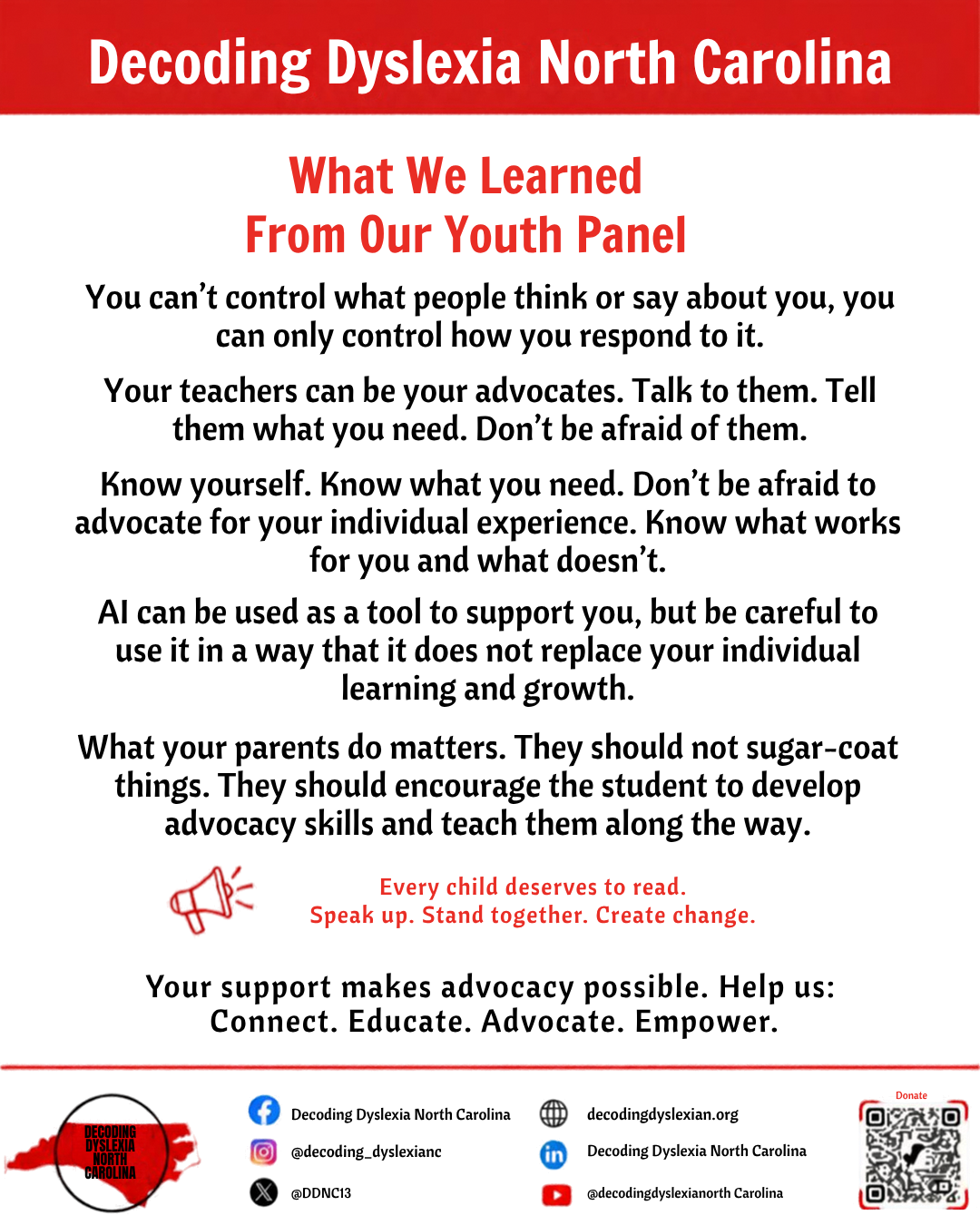
We kicked off Dyslexia Awareness Month with an inspiring and engaging panel featuring dyslexic youth from across North Carolina who shared their experiences in their own words. Our panelists spoke openly about their journeys with dyslexia, including the challenges they have faced, the emotions that come with learning differently, the people and strategies that have supported them, and the experiences that have helped them recognize their strengths and build confidence.
We were also joined by Shannon McNamara, Associate Director of Connective Parenting and clinical social worker, who helped guide the conversation and offered valuable insight into the emotional aspects of dyslexia, including self-advocacy, resilience, confidence, and the importance of feeling understood and supported.
The evening was filled with honest conversations, thoughtful questions, encouragement, and meaningful connections. We are incredibly grateful to our young panelists for sharing their voices and reminding us how much we can learn when we truly listen to students.
Join Us for Our Next Youth Panel in Spring 2027!
Good news! We are already planning another Dyslexic Youth Voices panel for Spring 2027!
We are always looking for young people with dyslexia who would like to participate! Whether they want to share their experiences, offer ideas, ask questions, or simply connect with others who understand their journey, their voices matter.
Interested in participating or know a young person who might be? Contact Decoding Dyslexia North Carolina to learn more about our upcoming panel.
Please help us spread the word! Share this opportunity with families, educators, schools, and communities across North Carolina. Together, we can create more opportunities for young people with dyslexia to be heard, understood, supported, and celebrated.
Every dyslexic voice matters, and every story has the power to make a difference.